

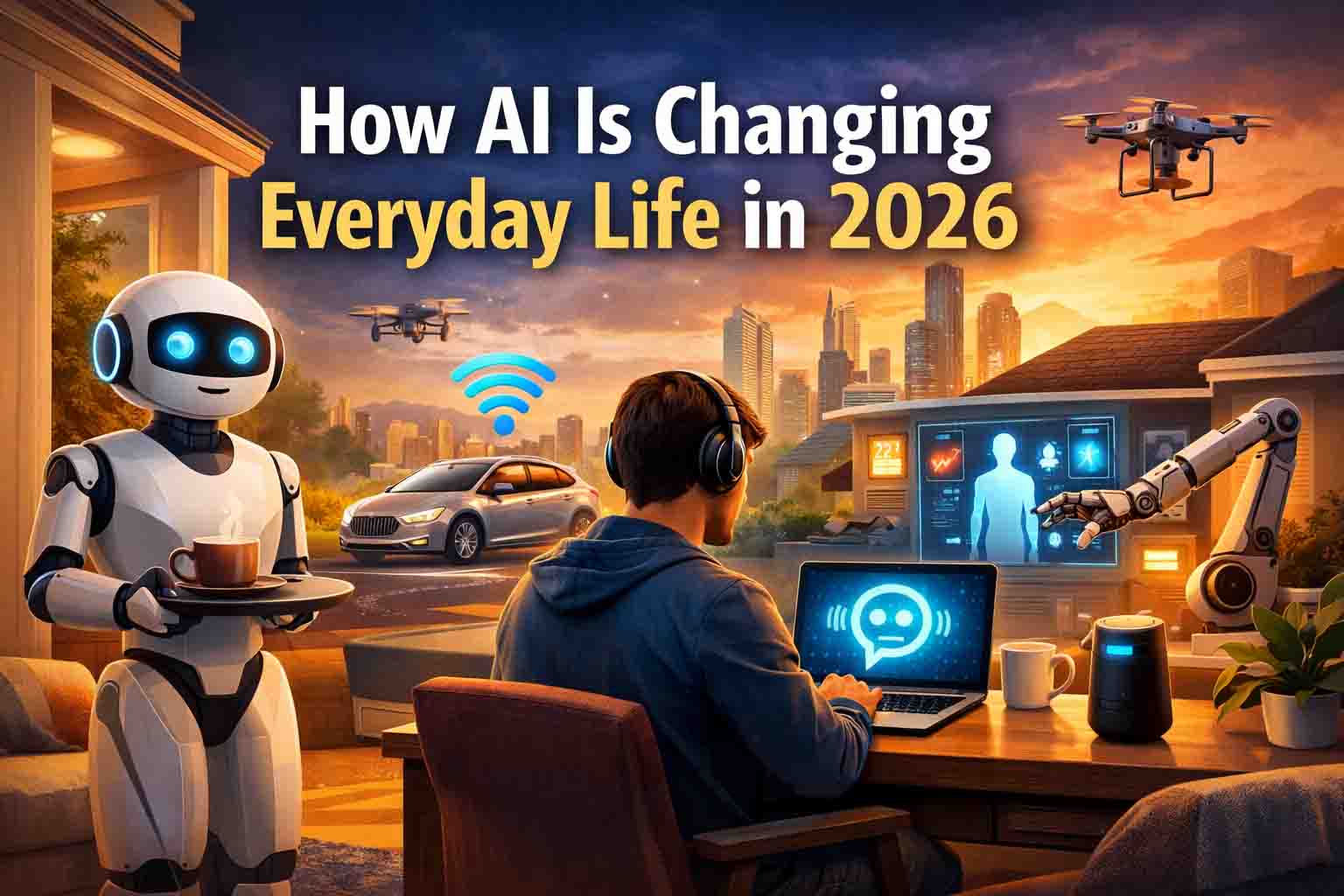
Artificial Intelligence has become a silent part of modern life in 2026, shaping how we work, communicate, shop, travel, and even make daily decisions. Most people do not even realize how often they interact with AI because it is now deeply integrated into apps, devices, and services they use every day. From personalized recommendations to smart automation, AI is no longer a future concept—it is an invisible system running in the background of everyday life, making things faster, easier, and more efficient.
AI in Daily Communication and Digital Interaction
Smarter Messaging and Email Assistance
AI has significantly improved the way people communicate through messaging apps and email platforms. Smart writing assistants now help users draft messages, correct grammar, and adjust tone based on context. This makes communication faster and more professional, even for users with limited writing skills. As a result, AI-powered communication tools are becoming essential in both personal and business conversations.
Real-Time Translation and Global Connectivity
One of the most powerful impacts of AI is real-time translation. People can now chat, call, or send messages across languages without barriers. AI translation systems instantly convert speech and text, making global communication smoother than ever. This has opened new opportunities for international collaboration, remote work, and cross-border relationships.
AI-Powered Social Media Experience
Social media platforms use AI algorithms to personalize content feeds, showing users posts, videos, and ads based on their interests. This creates a highly customized experience where no two users see the same content. While it increases engagement, it also raises awareness about how AI shapes opinions and online behavior in subtle ways.
AI in Work, Productivity, and Business
Automated Task Management and Scheduling
AI tools are now widely used to manage tasks, schedules, and reminders. Virtual assistants can organize meetings, prioritize work, and even suggest the best time to complete tasks. This reduces manual effort and helps professionals stay more productive throughout the day.
AI in Content Creation and Marketing
Businesses are using AI to generate content, design marketing campaigns, and analyze customer behavior. AI-powered writing tools help create blogs, ads, and product descriptions in seconds. This has transformed digital marketing strategies, making them faster and more data-driven while reducing costs.
Smart Decision-Making in Business Operations
Companies rely on AI systems to analyze large amounts of data and support decision-making. From predicting sales trends to managing supply chains, AI provides insights that help businesses reduce risks and improve efficiency. This makes modern business operations more accurate and strategic.
AI in Daily Life, Health, and Smart Living
Personalized Health Monitoring Systems
AI-powered health devices and apps track heart rate, sleep patterns, and physical activity in real time. These systems provide personalized health suggestions and early warnings about potential issues. This allows individuals to take better control of their well-being without frequent hospital visits.
Smart Homes and Automation Systems
Smart home technology uses AI to control lighting, temperature, security, and appliances automatically. These systems learn user behavior and adjust settings to improve comfort and energy efficiency. As a result, homes are becoming more intelligent and responsive to daily routines.
AI in Online Shopping and Recommendations
E-commerce platforms use AI to analyze browsing behavior and recommend products based on user preferences. This creates a personalized shopping experience where customers find relevant items faster. AI also helps businesses optimize pricing, inventory, and customer service.
AI in Transportation, Safety, and Future Mobility
Intelligent Navigation and Traffic Optimization
AI-powered navigation systems provide real-time traffic updates and suggest the fastest routes. These systems analyze road conditions, accidents, and congestion to improve travel efficiency. This reduces travel time and fuel consumption for millions of users.
Autonomous and Semi-Autonomous Vehicles
Self-driving technology is gradually becoming part of modern transportation. AI systems in vehicles help with parking, lane detection, and collision prevention. While fully autonomous cars are still evolving, semi-autonomous features are already improving road safety.
AI in Public Safety and Surveillance Systems
AI is widely used in security systems to detect unusual activity and enhance public safety. Smart surveillance tools can identify potential threats faster than traditional systems. This helps authorities respond quickly and improve urban safety management.
FAQs
1. How is AI changing everyday life in 2026?
AI is improving communication, work productivity, healthcare, shopping, and transportation through automation and personalization.
2. Do people use AI without realizing it?
Yes, most apps and devices use AI in the background for recommendations, navigation, and automation.
3. Is AI replacing human jobs completely?
AI is automating tasks but also creating new job opportunities in technology and digital industries.
4. How does AI improve productivity?
AI helps manage tasks, automate workflows, and provide smart suggestions that save time and effort.
5. Is AI safe to use in daily life?
Yes, when used responsibly, AI systems are designed to improve convenience and safety while protecting user data.
Conclusion
Artificial Intelligence is no longer a distant innovation—it is quietly transforming everyday life in 2026 in ways most people do not even notice. From communication and work to health, shopping, and transportation, AI is making daily routines faster, smarter, and more personalized. As this technology continues to evolve, its influence will only grow deeper, shaping a future where intelligent systems support nearly every aspect of human life.
