

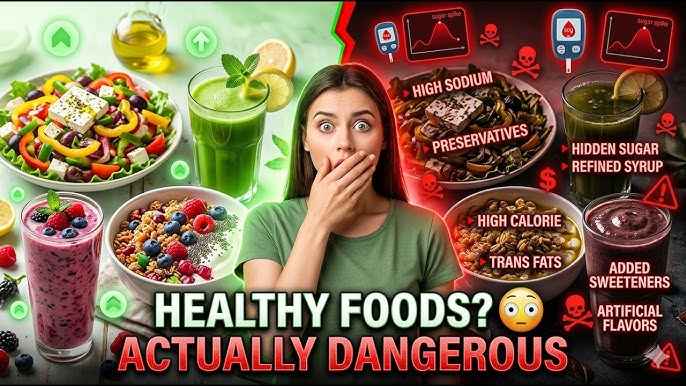
Many people try to eat healthy foods to improve their lifestyle, lose weight, or avoid diseases, but not everything labeled “healthy” is actually good for your body. In fact, several commonly consumed foods are marketed as nutritious while they contain hidden sugars, unhealthy fats, or highly processed ingredients that can negatively affect your health over time. Understanding these hidden risks is important for making smarter dietary choices and improving long-term wellness.
Hidden Sugars in “Healthy” Foods
Flavored Yogurt and Sweetened Dairy Products
Flavored yogurts are often considered a healthy breakfast or snack option, but many brands contain high amounts of added sugar. Even small servings can include more sugar than a dessert, which can lead to weight gain and blood sugar spikes. While yogurt itself is rich in protein and probiotics, the added flavoring reduces its nutritional value significantly. Choosing plain yogurt and adding natural fruits is a healthier alternative for better digestion and energy balance.
Granola and Breakfast Cereals
Granola and cereals are widely promoted as nutritious breakfast foods, but many packaged versions contain refined grains, sweeteners, and artificial flavors. These ingredients can cause rapid increases in blood sugar levels and leave you feeling hungry soon after eating. Although they may appear healthy due to labels like “high fiber” or “natural,” the actual nutritional content often tells a different story. Reading labels carefully is essential when selecting breakfast options.
Fruit Juices and Smoothies
Fruit juices and store-bought smoothies are often seen as vitamin-rich drinks, but they usually lack fiber and contain concentrated sugars. Without fiber, the natural sugar from fruits gets absorbed quickly into the bloodstream, which can lead to energy crashes and weight gain. Even 100% fruit juice can be problematic when consumed in large amounts. Eating whole fruits is a better choice for balanced nutrition and long-lasting energy.
Processed “Diet” and Low-Fat Foods
Low-Fat Packaged Foods
Low-fat foods are marketed as healthier options, but removing fat often means adding sugar or artificial additives to maintain taste. This can make them less healthy than their full-fat versions. Additionally, healthy fats are essential for hormone balance and brain function. Consuming too many low-fat processed foods can actually disrupt nutritional balance and increase cravings.
Diet Sodas and Sugar-Free Drinks
Diet sodas are often chosen by people trying to reduce sugar intake, but they contain artificial sweeteners that may affect metabolism and gut health. While they are calorie-free, they can still trigger cravings for sweet foods and increase appetite. Regular consumption may also be linked to long-term health concerns, making water or natural beverages a safer option.
Packaged Protein Bars
Protein bars are widely used as fitness snacks, but many of them contain added sugars, syrups, and processed ingredients. While they may provide quick energy, they are not always as healthy as they seem. Some bars have more sugar than a candy bar, which reduces their nutritional benefits. Whole food sources of protein are often a better choice for sustained health.
Everyday Foods with Hidden Health Risks
White Bread and Refined Grains
White bread is often consumed daily, but it is made from refined flour that lacks fiber and essential nutrients. This can cause rapid spikes in blood sugar and lead to energy crashes. Regular consumption may also contribute to weight gain and digestive issues. Whole grain alternatives provide more fiber and better long-term health benefits.
Store-Bought Salad Dressings
Salads are considered very healthy, but store-bought dressings can turn them into high-calorie meals. Many dressings contain unhealthy oils, sugar, and preservatives that reduce the nutritional value of fresh vegetables. Even small servings can add significant calories. Homemade dressings with olive oil and natural ingredients are a healthier alternative.
Microwave Popcorn
Microwave popcorn may seem like a light snack, but many packaged versions contain artificial flavoring, unhealthy fats, and excessive sodium. These additives can negatively impact heart health when consumed frequently. Air-popped popcorn without added chemicals is a much healthier option for snacking.
FAQs
1. Are all healthy-looking foods actually good for health?
No, many foods marketed as healthy contain hidden sugars, fats, or additives.
2. Is flavored yogurt bad for weight loss?
Yes, due to high sugar content, it may slow down weight loss progress.
3. Are diet drinks safe to consume daily?
They are not ideal for daily use because of artificial sweeteners and possible health risks.
4. What is the healthiest breakfast option?
Whole foods like oats, fruits, and plain yogurt are better choices.
5. Why is white bread considered unhealthy?
It lacks fiber and causes quick spikes in blood sugar levels.
Conclusion
Many foods that appear healthy on the surface can actually contain hidden ingredients that negatively affect your health over time. From sugary yogurts and processed snacks to refined grains and diet drinks, it is important to look beyond marketing labels and understand what you are really eating. By choosing whole, natural, and minimally processed foods, you can significantly improve your overall health, energy levels, and long-term well-being.
